

Winter Utility Checks for a Rental Apartment in Sofia
At a glance: what to check before cold weather
Winter utility checks for a rental apartment in Sofia should establish three things before cold weather: whether the heating works, what the meters record, and who will respond to a fault. Arrange access with the tenant, identify the heating system, photograph readable meter displays and note any leaks or damp. Test the controls using the appliance instructions. If district heating has not started, leave the operational test open and arrange a follow-up; a visual inspection cannot prove that the radiators will heat properly.
The quick answer is to prioritise safety and water leaks, then heating and ventilation, then billing records. Separate work inside the flat from faults involving the building’s shared system. Give each unresolved issue an owner and an agreed next step. Keep photographs and invoices together, and confirm who receives utility notices. This creates a usable winter plan, not a guarantee of lower bills: costs also depend on the building, the billing arrangement and how the apartment is used.
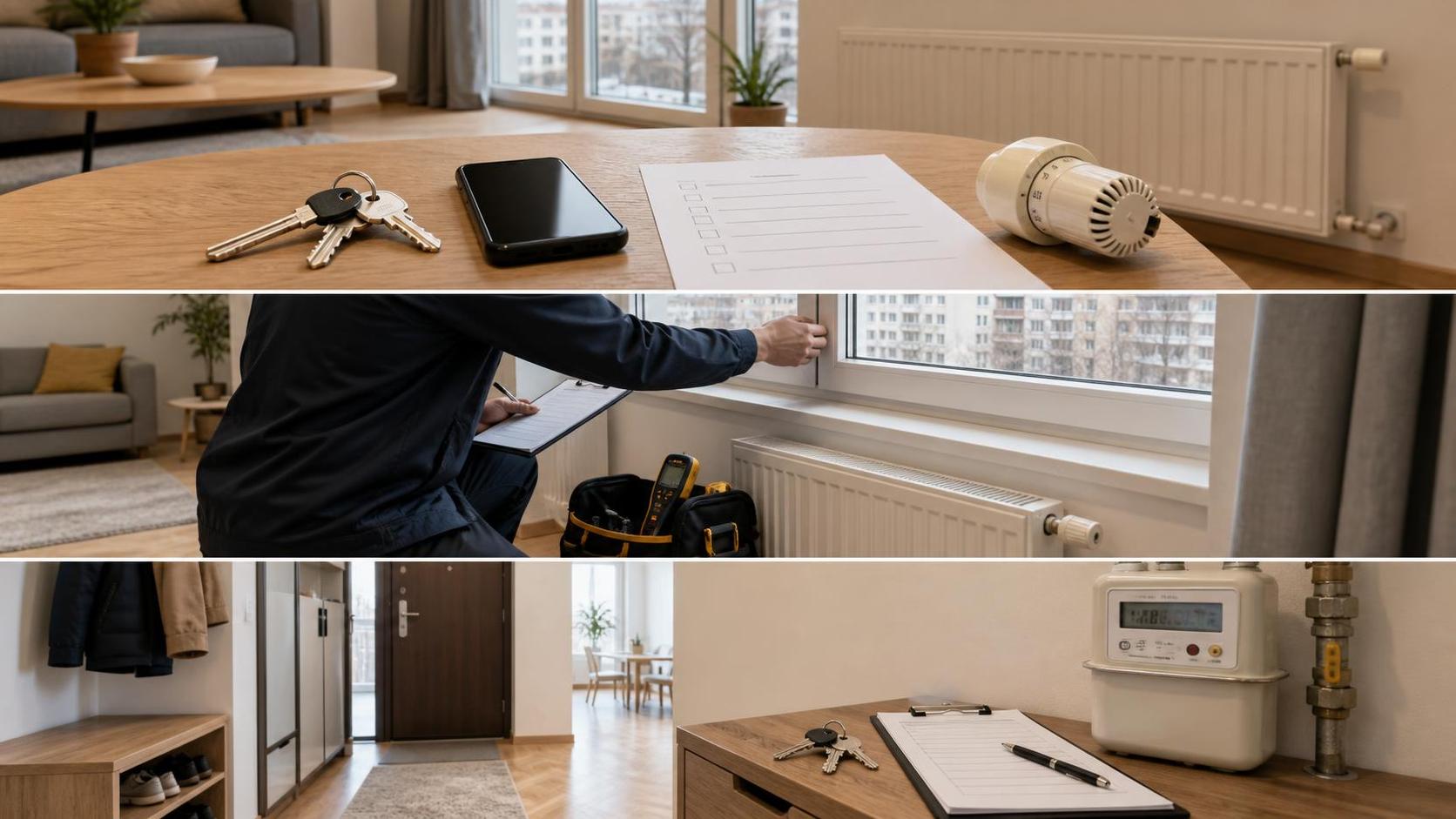
Planning winter utility checks for a rental apartment
A Sofia flat may use district heating, an air conditioner in heating mode, or another installed system. Do not assume that the controls or maintenance needs are interchangeable. For district heating, inspect visible radiator connections for leaks, check that controls are accessible and ask the building representative about known shared-system problems. Once heat is available, record which rooms remain cold and under what settings. Do not dismantle radiators or alter shared pipework as a tenant checklist task.
For an air conditioner, check the remote control, heating mode and accessible filters against the manufacturer’s instructions. Note error codes and unusual noise for the service engineer. Do not climb outside to inspect an outdoor unit. For the water heater, look for visible leaks and ask about its service history. Electrical or gas concerns need an appropriately qualified professional, not an improvised repair. Ask whether the proposed work is a safety repair, routine servicing or an optional upgrade; that distinction helps owners compare quotes without overlooking a fault.
Stop unwanted draughts without trapping moisture
Open and close windows, check handles and inspect the seals. A poorly adjusted opening may need a targeted repair rather than replacement of the whole window. However, sealing every opening is not the objective. Energy Saving Trust distinguishes unwanted draughts from ventilation needed for air quality and safe appliance operation. Keep designed vents clear. Its general building-care guidance is useful here; its UK grants, prices and savings estimates are not evidence for a Sofia property.
Photograph damp patches and note when they appear: after rain, during cooking or after a shower. Condensation can form where moist air meets a cold surface, while plumbing or building-envelope leaks need a different response. Check that bathroom extraction works and that furniture is not blocking airflow. Do not automatically attribute mould to tenant behaviour. Persistent moisture needs investigation before redecoration. A dehumidifier may help manage moisture temporarily, but it does not repair a leaking pipe or roof.

Build a meter record that can actually be used
List the electricity meter, water meters and any heating devices, with their locations and identifying numbers. Photograph each readable display with the date recorded in the inspection notes. Do not break seals or interfere with a meter. Confirm who can access locked meter cupboards and who receives reading notices. These photographs support a handover record; they do not replace the provider’s official reading process or explain a heating allocation on their own.
District heating has a building-level component that is easy to miss when a tenant is used to an individual boiler. Toplofikacia Sofia explains that heat measured at the building’s main meter is allocated between properties. Its guidance distinguishes monthly remote readings from annual reconciliation of forecast and actual consumption. Check which arrangement applies to this flat with the heat-allocation company. Avoid converting a radiator device display into a bill without understanding what that device measures.
If a tenancy changes during the heating year, agree how a later reconciliation relating to the occupancy period will be reviewed. Keep the handover date, readings and relevant invoices together. Do not demand an invented balancing amount or describe the last monthly payment as a final settlement without checking. Compare the billing period and whether figures are estimated or actual before treating a higher invoice as proof that an appliance is faulty.
Agree access, repair priorities and a follow-up
Use a short action log: observed problem, next action, responsible person and agreed date. Separate an immediate safety concern from a loss of heating and from a cosmetic improvement. For planned work, request a quote distinguishing labour, parts and approval for additional work. Responsibility for payment depends on the contract, cause and applicable rules; this checklist does not assign every repair to either party. Where urgent action is needed, making the situation safe comes before comparing optional upgrades.
Give the tenant the agreed fault-reporting contact and basic operating instructions. Confirm access before a contractor attends rather than treating a winter check as permission for an unannounced visit. A wider maintenance calendar helps schedule repeat tasks, while a mid-lease inspection can check whether a recorded defect has actually been resolved. Keep those broader processes separate from this focused utility check.
Frequently asked questions
Will closing the radiators reduce district-heating charges to zero?
Do not assume so. Toplofikacia Sofia’s FAQ explains that allocated building-installation energy can still be payable when radiators are not used. Ask for the breakdown for the particular property rather than promising a tenant that switching off a radiator removes every heating charge.
Can handover photographs replace an official heating reading?
No. They record evidence at a particular date, not the provider’s formal allocation. The provider describes annual reconciliation as comparing forecast and actual consumption. Ask the appointed heat-allocation company what reading procedure it needs when an occupier changes, and retain the written response with the handover record.
Should every gap be sealed if the windows have condensation?
No. Energy Saving Trust advises against adding draught proofing where ventilation is inadequate or condensation is already a problem. Investigate moisture sources and maintain necessary ventilation. Heating, airflow and any underlying leak need consideration together; sealing a vent is not a substitute for diagnosing damp.
Conclusion
Finish with tested controls, dated readings and a clear list of unresolved work. Confirm the result after a repair, not merely that someone visited. If you need help organising a Sofia rental, send Top Kvartiri an enquiry and ask which inspection, coordination or management tasks could be included in a proposal for your property.


Comments